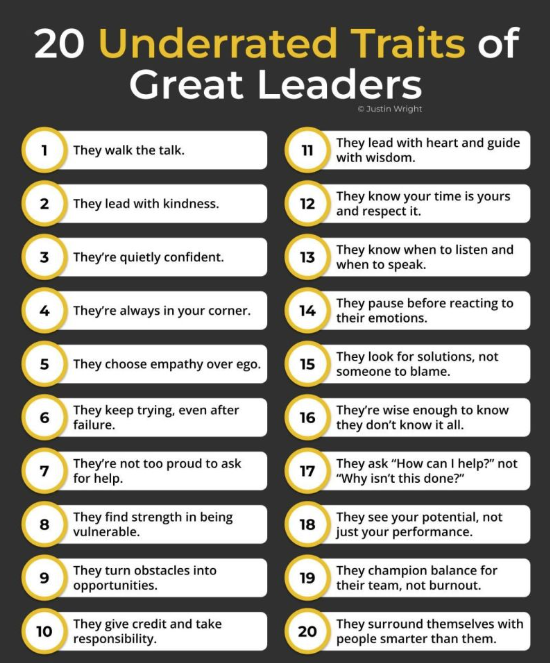
20 Underrated Traits of Great Leaders
 Oenca
Oenca 

This guide explores 20 underrated traits that define great leaders - including practical explanations & actionable steps to help you live them out!
20 Underrated Traits of Great Leaders
A Faith-Inspired Leadership Guide
Introduction
Leadership is about more than achieving goals or managing tasks. It’s about cultivating trust, inspiring others, and leading with a heart grounded in integrity and faith. Often, the most powerful leadership qualities aren’t the ones that grab headlines but the quiet, consistent traits that make a lasting impact.
This guide explores 20 underrated traits that define great leaders. Each trait is paired with a practical explanation, a faith-aligned reflection, and actionable steps to help you live them out in your leadership journey.
As you read, reflect on your own leadership practices:
- Which of these traits do you naturally embody?
- Which ones could you develop further?
- How can your faith inspire your leadership?
Let’s dive in and uncover how these traits can transform the way you lead.
1. They Walk the Talk
What It Means: Authentic leaders lead by example. Their actions align with their words, inspiring trust and respect.
Faith Reflection: “Whoever claims to live in him must live as Jesus did.” – 1 John 2:6
Example: A manager who expects punctuality ensures they’re always on time for meetings.
Actionable Tip: Identify one area where your actions can better align with your words this week.
2. They Lead with Kindness
What It Means: True leaders balance firmness with compassion, valuing the humanity in their team.
Faith Reflection: “Be kind and compassionate to one another.” – Ephesians 4:32
Example: During a tough deadline, a leader acknowledges their team’s effort and provides encouragement.
Actionable Tip: Practise saying one kind, genuine word to someone you lead every day.
3. They’re Quietly Confident
What It Means: Great leaders inspire confidence through calm assurance rather than boasting.
Faith Reflection: “Blessed are the meek, for they will inherit the earth.” – Matthew 5:5
Example: A leader calmly handles a crisis without needing to assert dominance.
Actionable Tip: Pause before speaking in meetings to create an atmosphere of calm assurance.
4. They’re Always in Your Corner
What It Means: Great leaders actively support their team and root for their success.
Faith Reflection: “Carry each other’s burdens, and in this way, you will fulfil the law of Christ.” – Galatians 6:2
Example: A leader encourages a struggling team member to keep going after a setback.
Actionable Tip: Reach out to someone on your team who may need encouragement this week.
5. They Choose Empathy Over Ego
What It Means: Compassionate leaders seek to understand others rather than asserting their authority.
Faith Reflection: “Do nothing out of selfish ambition or vain conceit. Rather, in humility value others above yourselves.” – Philippians 2:3
Example: A leader seeks feedback and genuinely listens before making decisions.
Actionable Tip: In your next meeting, ask more questions and listen without interrupting.
6. They Keep Trying, Even After Failure
What It Means: Resilient leaders view failure as a chance to grow and keep pushing forward.
Faith Reflection: “For though the righteous fall seven times, they rise again.” – Proverbs 24:16
Example: A leader encourages their team to learn from a failed project and try again.
Actionable Tip: Identify one lesson from a past failure and put it into practice this week.
7. They’re Not Too Proud to Ask for Help
What It Means: Humble leaders know when to lean on others’ strengths.
Faith Reflection: “Where there is no guidance, a people falls, but in an abundance of counsellors there is safety.” – Proverbs 11:14
Example: A leader seeks advice from a colleague or mentor on a tough decision.
Actionable Tip: Ask for input or help on a current challenge to show humility and collaboration.
8. They Find Strength in Being Vulnerable
What It Means: Vulnerable leaders foster trust by sharing their struggles and being authentic.
Faith Reflection: “My grace is sufficient for you, for my power is made perfect in weakness.” – 2 Corinthians 12:9
Example: A leader shares a personal story of failure to inspire others.
Actionable Tip: Share a lesson from your own journey with someone on your team this week.
9. They Turn Obstacles into Opportunities
What It Means: Visionary leaders see challenges as opportunities to innovate and grow.
Faith Reflection: “And we know that in all things God works for the good of those who love him.” – Romans 8:28
Example: A leader finds creative solutions during a resource shortage.
Actionable Tip: Reframe one challenge in your work as an opportunity to improve.
10. They Give Credit and Take Responsibility
What It Means: Great leaders celebrate others’ successes and take ownership of mistakes.
Faith Reflection: “Whoever exalts himself will be humbled, and whoever humbles himself will be exalted.”
– Matthew 23:12
Example: A leader acknowledges a team’s hard work publicly.
Actionable Tip: Look for an opportunity to give credit to someone today.
11. They Lead with Heart and Guide with Wisdom
What It Means: Great leaders balance compassion with sound judgement to make impactful decisions.
Faith Reflection: “If any of you lacks wisdom, you should ask God, who gives generously to all without finding fault.” – James 1:5
Example: A leader listens to their team’s concerns before deciding on a challenging issue.
Actionable Tip: Before making a key decision, ask for feedback and pray for wisdom.
12. They Know Your Time is Yours and Respect It
What It Means: Effective leaders value others’ time, avoiding unnecessary meetings or tasks.
Faith Reflection: “Let your yes be yes, and your no, no.” – Matthew 5:37
Example: A leader ensures meetings are productive and respects their team’s schedules.
Actionable Tip: Review your next meeting agenda to ensure it respects everyone’s time.
13. They Know When to Listen and When to Speak
What It Means: Skilled leaders balance listening with assertive communication.
Faith Reflection: “Everyone should be quick to listen, slow to speak and slow to become angry.” – James 1:19
Example: A leader allows everyone to share their perspective before offering their own.
Actionable Tip: In your next conversation, listen fully before responding.
14. They Pause Before Reacting to Their Emotions
What It Means: Emotionally intelligent leaders take time to process emotions before responding.
Faith Reflection: “Do not be quickly provoked in your spirit, for anger resides in the lap of fools.” – Ecclesiastes 7:9
Example: A leader who steps away to reflect before addressing a heated conflict.
Actionable Tip: When faced with a strong emotion, count to 10 and pray before responding.
15. They Look for Solutions, Not Someone to Blame
What It Means: Problem-solving leaders focus on fixing issues rather than assigning fault.
Faith Reflection: “Bear with each other and forgive one another.”
– Colossians 3:13
Example: A leader focuses on a team’s recovery plan instead of dwelling on mistakes.
Actionable Tip: In your next setback, shift the focus to solutions, not blame.
16. They’re Wise Enough to Know They Don’t Know it All
What It Means: Humble leaders remain open to learning and growth.
Faith Reflection: “The fear of the Lord is the beginning of knowledge.”
– Proverbs 1:7
Example: A leader attends a workshop to improve their skills or learn from others.
Actionable Tip: Identify one area of leadership where you’d like to grow and seek out resources.
17. They Ask “How Can I Help?” Not “Why Isn’t This Done?”
What It Means: Supportive leaders focus on solutions rather than criticism.
Faith Reflection: “Carry each other’s burdens.” – Galatians 6:2
Example: A leader offers assistance when a team member struggles to meet a deadline.
Actionable Tip: Ask “How can I help?” in your next challenging situation.
18. They See Your Potential, Not Just Your Performance
What It Means: Visionary leaders invest in others’ long-term growth.
Faith Reflection: “I can do all this through him who gives me strength.”
– Philippians 4:13
Example: A leader mentors a team member to help them achieve their goals.
Actionable Tip: Identify someone you can encourage or mentor this week.
19. They Champion Balance for Their Team, Not Burnout
What It Means: Compassionate leaders prioritise well-being alongside productivity.
Faith Reflection: “Come to me, all you who are weary and burdened, and I will give you rest.” – Matthew 11:28
Example: A leader encourages their team to take breaks and respects boundaries.
Actionable Tip: Check in on your team’s workload and support healthier balance.
20. They Surround Themselves with People Smarter Than Them
What It Means: Confident leaders value diverse talents and perspectives.
Faith Reflection: “Plans fail for lack of counsel, but with many advisers they succeed.” – Proverbs 15:22
Example: A leader creates a team of experts and trusts their input.
Actionable Tip: Seek advice or collaboration from someone with skills you admire.
IN CONCLUSION...
Leadership isn’t about perfection; it’s about growth, faith, and intentionality. The traits outlined in this guide may not always grab headlines, but they’re the qualities that leave a lasting legacy.
Start small: Choose one trait to practise this week. Reflect on its impact on your leadership and how it aligns with your faith. Then share your experiences with others in your leadership community to inspire growth and connection.
Great leadership is about more than just results—it’s about the lives you touch and the example you set. Let’s lead with faith, integrity, and purpose.
Categories: : General Leadership